You do not need a dozen sauces to make a satisfying Chinese-inspired rice bowl. A small amount of zhacai, crunchy Chinese pickled mustard stem, can bring a savory accent to plain rice, warm tofu and crisp vegetables. If you have seen packets of zhacai at an Asian grocery store and wondered what to do with them, this guide is an easy place to begin.
What is zhacai?
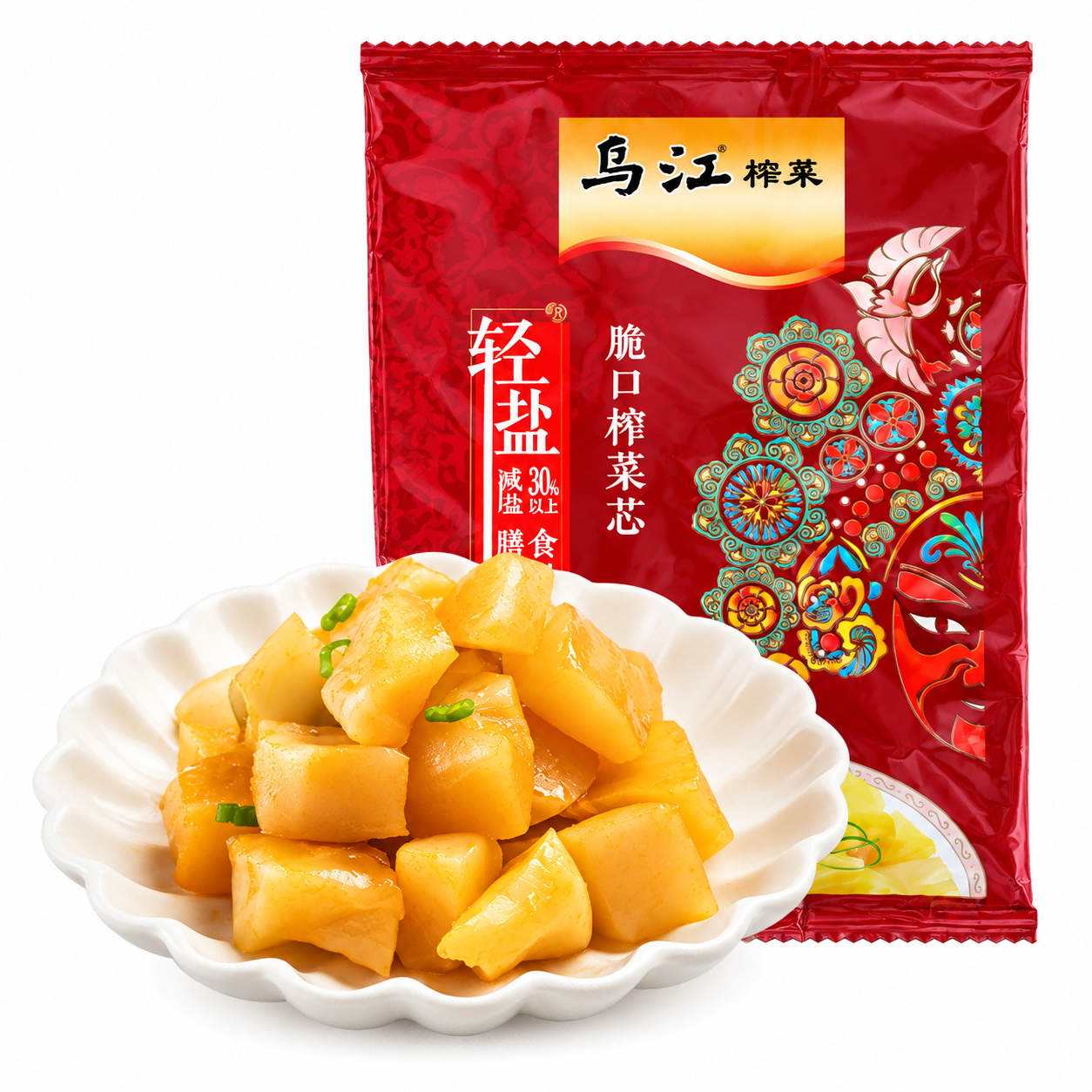
Zhacai (榨菜) is a preserved vegetable made from the swollen stem of a type of mustard plant. It is generally cut into strips or pieces and seasoned. It is familiar in many Chinese households as a small side dish with congee, noodles or rice.
It is not quite the same as fresh mustard greens, sauerkraut or a cucumber pickle. What makes it useful is its firm, crunchy texture and concentrated savory flavor. Varieties differ: some are chili-seasoned, others are more gently seasoned, and the exact salt level depends on the recipe and brand.
SinoPantry has a Wujiang Crunchy Pickled Mustard Stem listing. Read the package ingredients and nutrition panel before buying or using it; the online description is not a substitute for the manufacturer's label.
How does zhacai taste?
Expect a pronounced savory, tangy and seasoned character, with a pleasant crunch. Some products contain chili or other seasonings. Because preserved vegetables can be strongly seasoned, think of zhacai as an accent rather than the main vegetable in a dish.
Start with a spoonful. Taste it first, then decide whether your meal needs soy sauce or salt. You may find you do not need either.
Quick tofu and zhacai rice bowl
Total time: about 15 minutes with cooked rice ready
Servings: 2
Difficulty: Beginner
Ingredients
- 2 cups freshly cooked rice, or safely refrigerated rice reheated thoroughly
- 200 g firm tofu, drained and cut into bite-size cubes
- 1–2 tablespoons zhacai, chopped as needed
- 1 small cucumber, diced
- 2 scallions, thinly sliced
- 2 teaspoons neutral cooking oil
- 1 teaspoon rice vinegar, optional
- A few drops of sesame oil, optional
- Water as needed
Check all packaged ingredients for allergens and dietary restrictions. Sesame and soy are common allergens, and the exact zhacai recipe can vary.
Step 1: Prepare the rice
Cook rice according to the package directions. Divide hot rice between two serving bowls. If using previously cooked rice, use rice that was refrigerated promptly and reheat it thoroughly. Do not leave cooked rice standing at room temperature for prolonged periods.
Step 2: Taste and chop the zhacai
Open the package and follow its storage and serving instructions. Taste a small amount before adding it to the pan. Chop longer strips to distribute flavor evenly. Do not add salt yet.
Step 3: Cook the tofu
Heat a nonstick pan over medium heat and add the oil. Add the tofu and cook for approximately 5–7 minutes, turning occasionally, until hot throughout and lightly golden on the outside.
Step 4: Add the preserved mustard
Add the chopped zhacai for the final minute and gently toss with the tofu. This warms the seasoning without losing all of the crunch.
Step 5: Build the bowls
Place the tofu and zhacai over the rice. Add cucumber and scallions. If you like, finish with a little rice vinegar or sesame oil. Taste before adding extra seasoning.
How much zhacai should you use?
For two servings, start with one tablespoon total and adjust at the table. Different brands and flavors can be markedly different, so no single amount is perfect for every packet.
If you accidentally use too much, add plain rice, unseasoned tofu or more fresh vegetables. Trying to balance strong seasoning with additional sauces usually makes the bowl heavier.
Four other ways to use zhacai
With congee. Serve a little on the side of plain rice porridge for contrast.
With noodles. Add a small amount to warm noodles with scallions and cooked vegetables. Taste before using salty sauces.
In a quick stir-fry. Add zhacai near the end when cooking mushrooms, tofu or cabbage.
With fried rice. Chop it finely and fold it into fried rice near the end. Use less additional soy sauce than usual.
Can you make this recipe without tofu?
Yes. Try cooked mushrooms, sautéed cabbage or another protein you enjoy. The important combination is something mild, such as plain rice, alongside a small amount of the strongly seasoned preserved vegetable.
Storing zhacai and prepared rice safely
Follow the manufacturer's directions for storing the zhacai after opening. Packets can vary in whether they need refrigeration and how quickly they should be used after opening.
Refrigerate leftovers promptly. Cooked rice needs particular care: cool it quickly, refrigerate it safely and reheat thoroughly. Discard food that has been left in unsafe conditions.
Where to buy zhacai
You can look for preserved mustard stem at Asian grocery stores, or review SinoPantry's Wujiang Crunchy Pickled Mustard Stem. Confirm pack size, label details and shipping availability at checkout. If you are new to Chinese seasonings, see our Chinese pantry starter guide for a practical way to choose versatile ingredients.
Frequently asked questions
Is zhacai the same as pickled mustard greens?
No. Zhacai normally refers to the preserved stem, while other pickled mustard products use leaves or different parts of the plant. Read the product description and label to check what you are buying.
Does zhacai need to be cooked?
Many commercial varieties are ready to eat according to their label; always follow the manufacturer's handling instructions. In this bowl we warm it briefly with tofu.
Is all zhacai spicy?
No. The amount of chili depends on the particular product. Some varieties focus more on savory seasoning than heat.
Is zhacai low in sodium?
Do not assume so. Preserved vegetables may contain substantial sodium, and terms used in a product name do not establish a nutritional claim. Check the nutrition panel and compare serving sizes.
Bottom line: Begin with a small spoonful, pair it with mild food, and let the crunch make an everyday bowl feel more interesting.